Marketing automation
Two clients, one designer: turning repeat marketing work into tools that ask before they post
Marketing automation is the set of tools I built so two clients, the online casino MYBC and the Georgian gold marketplace goldmarket.ge, get a marketing department’s output from one person: the tools draw, write and schedule, and a human approves.
Role
Design & Marketing Lead · Creative Technologist
Timeline
2026 · ongoing
Clients
MYBC · Goldmarket
Year
2026

Two businesses needed a marketing team. They had one designer.
A casino on match-day deadlines
An ad for every match in every market, a card for each of 15,451 games, a news page posting daily, support around the clock. One person cannot draw that.
A marketplace with a founder and no marketer
Facebook posts twice a day, blog articles for Google, studio photos for every seller, someone watching sign-ups. In July I did all of it myself, prompt by prompt.
70
images art-directed, generated and placed one by one for Goldmarket in one July: 40 ads and 30 calendar posts
Before building anything, I measured what the clients already had.
No interviews, no personas. Every tool copies a voice or a look that was already there.
10,606 old support chats
Every question MYBC customers had already asked, sorted into seventy topics. Plus 36,874 real agent replies: median forty characters, 15 percent with an emoji.
25 real Facebook captions
The news page’s own posts: hook line in capitals, one line of context, no hashtags. Zero in twenty-five.
17,410 searches a month
The Georgian gold-price keyword cluster, 62 terms. The day the blog engine went live, the site ranked for zero of them.
The insight
Wherever the work repeats, build a tool. The tool does the hands. I keep the taste, and the approve button.
A pipeline that redrew the whole game catalog.
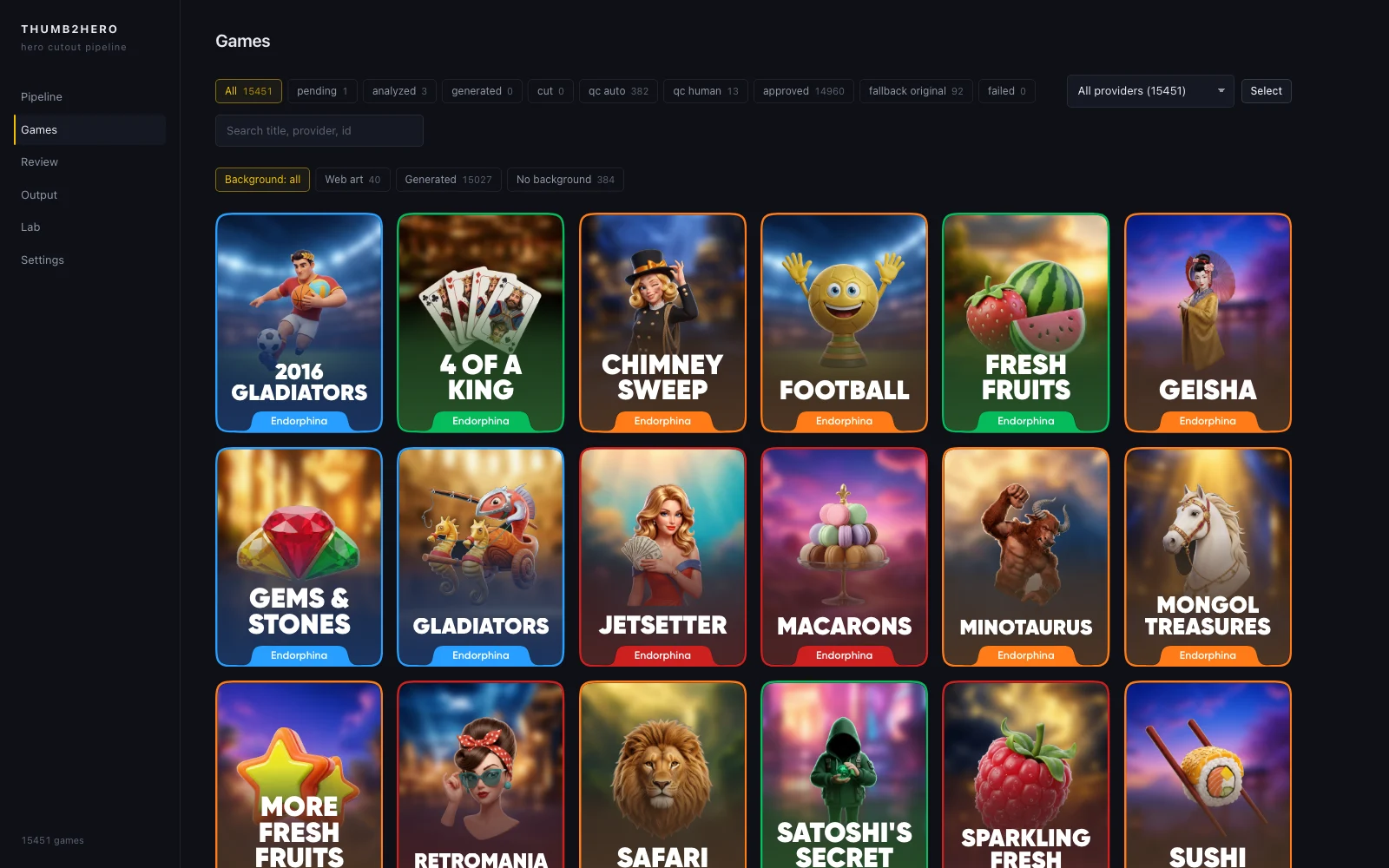
Every studio ships its own thumbnail with its own baked-in text, so the grid read like a market stall. Thumb2Hero reads the art, works out what the game is about, redraws the hero as one 3D character, cuts it out and picks a colour from the original.
One grid, one brand.
Top row: six studios, six styles, six kinds of baked-in text. Bottom row: the same six games after the pipeline. Multiply by fifteen thousand, at four to seven cents a drawing.
SolvesA casino on match-day deadlines

A review room, not a render button.
Four stages: read, draw, cut out, check. Cards the pipeline doubts wait here for a verdict: approve, reject, or draw again. The finished set leaves through a feed the developers pull from.
SolvesTrusting 15,000 generations
11.5%
of the first 8,276 cutouts came back hollow
A 100-game sample said every cutout passed. Then the background remover ate dark clothing on dark backgrounds: 950 broken cards. Now an auditor flags any cutout with holes inside the subject and re-cuts it for free.
An ad factory that turns a fixture into a finished campaign.
Give Automato a match and an offer; it produces Meta ads ready to import. Every ad is two layers: a painted scene forbidden to contain text, and a template on top that owns the logo, odds, headline and legal line. The model never touches the lettering.
The picture is AI. The words never are.
One campaign, two quarter-finals, three markets shown. Copy is translated and laid over the art at render time, so a new language is a re-render, not a redraw. Crests come from a sports database. Name a player who is not in the match and the tool says so.
SolvesAds in every market
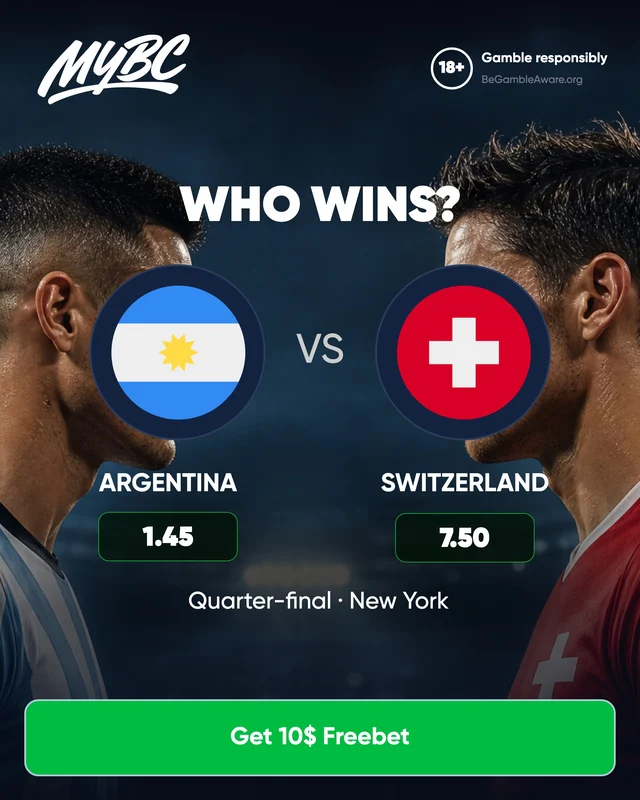
Crests and odds pulled from data.

Same campaign, another market.
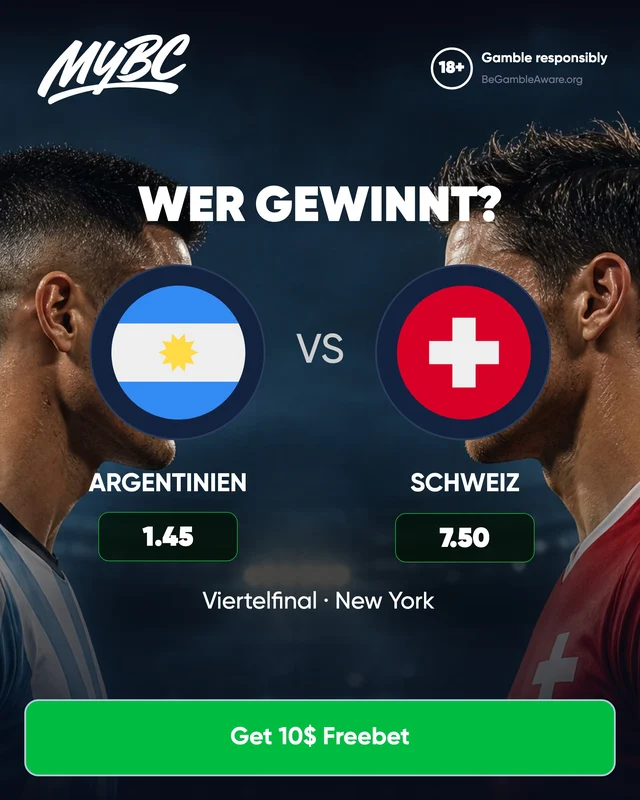
Copy overlaid, never baked in.
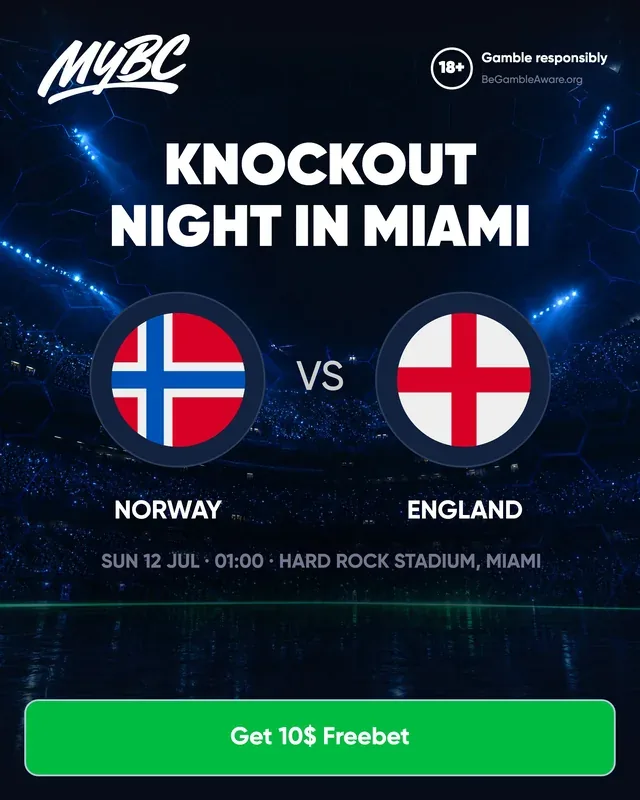
One of seven templates. No data for a template, no ad.
One creative, every size Meta asks for.
The hero is painted once and re-framed into story, feed and landscape, with safe zones measured off the real rendered ad. One round writes sixteen banners for a match in three to four minutes.
SolvesThe format matrix
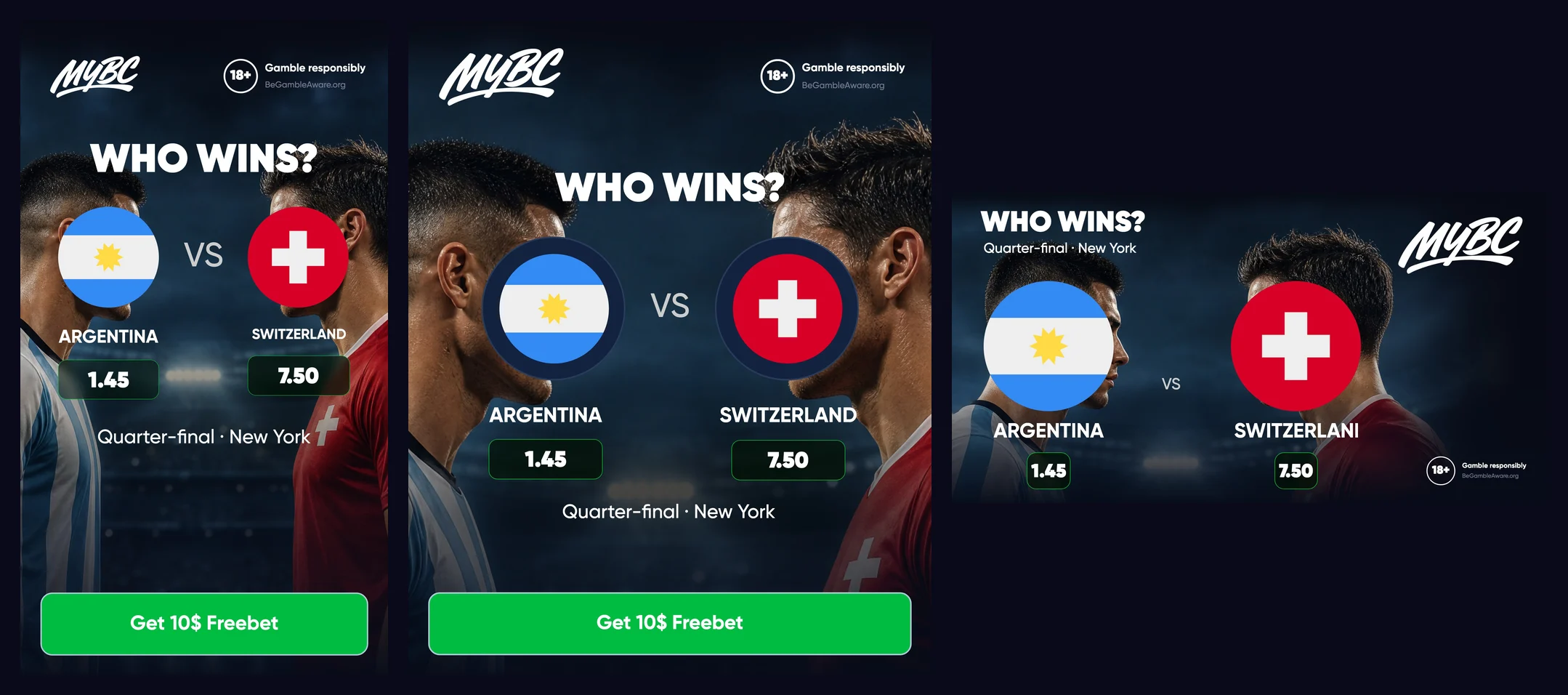
Campaign banners on the same rule.
Locked on the eleventh version: navy, hex grid, one cinematic object, the orange button. Only the story changes, at three credits a picture.
SolvesA brand at feed speed

The AI paints the scene. The template holds everything else still.

Same skeleton, another story.

The system holds even in Portuguese.
195
ads in one Meta campaign, two matches, four languages
Meta’s bulk file has 456 columns and takes about fifty ads at a time on a young account, so the export ships in six files of 26 to 39 ads and a person presses import six times. That stayed manual on purpose: a banned ad account costs more than a morning.
A newsroom that posts itself, with a human holding the button.
MYBC also runs a sports news site in seven languages. I built the part that turns its articles into Facebook posts.
30 min
between checks for new stories
It picks up the newest articles, flags legal risk and stale news, and writes the caption in the page’s measured voice.


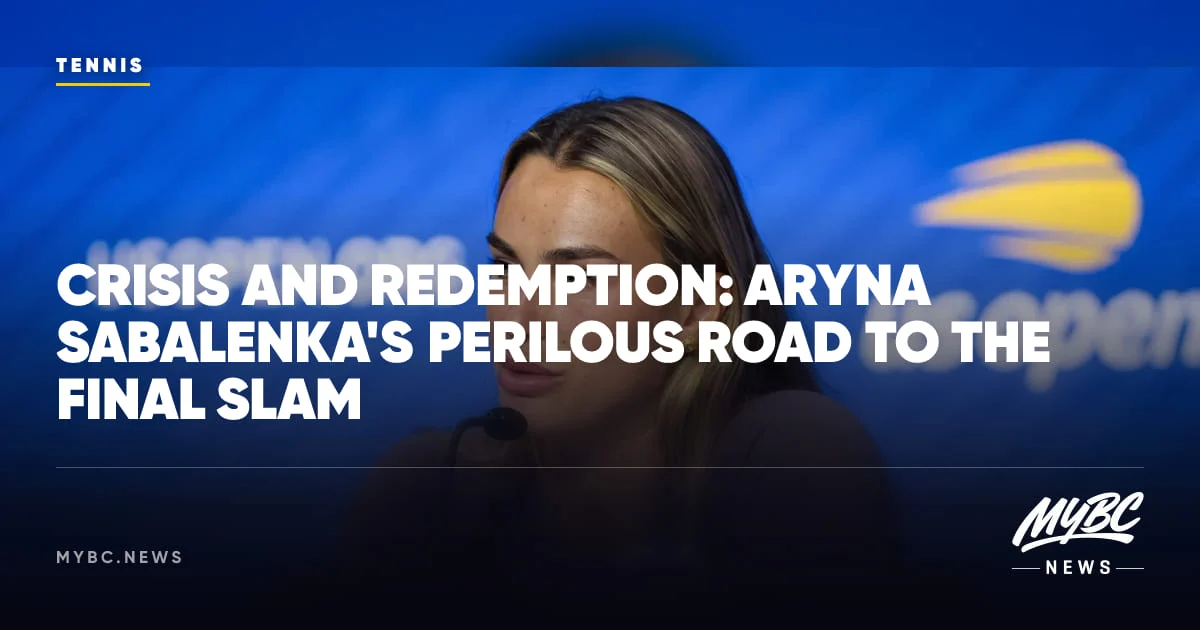
A designer draws the card
The look everything else imitates, and the job that does not fit in a day.
Render it in code
Runs on every article: its own photo, its crest, four sizes, half a second, no model fee.
Let the AI redraw it
For stories that deserve the hand-made look. About 13 cents a card, one tap away.
Nothing posts without a tap.
Each candidate lands in a Telegram room with four buttons: approve, cancel, swap the copy, redraw. My scoring gate held most stories back; the client wanted everything sent, so it was killed. The tap is the gate now. X was killed too: twenty cents a post, a login that expires every two hours.
SolvesDaily posts, zero unreviewed

One tap away, about 13 cents. The logo is stamped on afterwards as a real vector.
A support agent that writes like the team, because it studied the team.
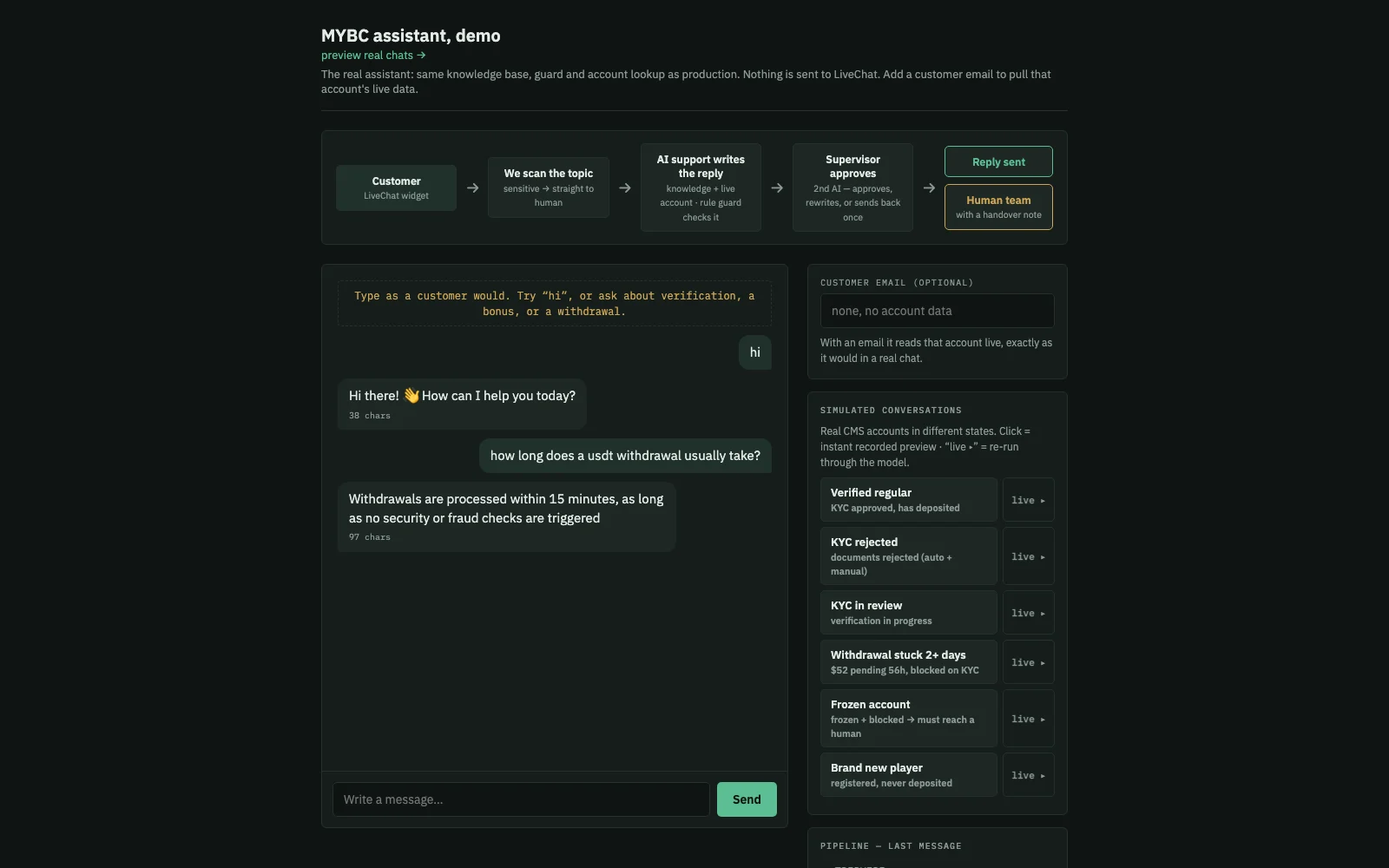
It answers from those 10,606 old chats, reads the customer’s live account first, and hands off with a briefing note when unsure. 455 questions the client’s own documents answer in contradicting ways were left out on purpose: it hands off instead of guessing.
“My first version wrote 230-character customer-service lectures. The bot was polite. The humans were fast. I rewrote it to be fast.”
— Measured across 36,874 real agent messages
Five gates between the model and the customer.
Scan the topic; sensitive ones go to a person. The AI drafts. A rule guard screens it. A second model approves, rewrites or rejects. Only then does it send, at a few cents a turn. On a 37-scenario battery it answers 35 and hands off the rest. It runs in shadow today; the client decides when it goes live.
SolvesWrong answers about money
A Facebook page that plans, draws, proofreads and asks.
A plugin inside the shop’s own WordPress. It plans two weeks of posts from the real listings, paints a scene for each, sets the Georgian headline in real fonts, and sends every card to Telegram with four buttons: approve, reject, new image, rewrite.
First I did the job by hand. Then I locked the look.
Forty ad images and thirty calendar posts in July, each prompted, picked and placed by me. Eight style tests picked the emerald world. The plugin reproduces that look; it does not invent one.
SolvesA marketplace with a founder and no marketer


The model paints. The code types.
Image models garble Georgian, so no letter on a card comes from one. The scene is painted text-free for about seven cents; headline, pill and logo are set by code afterwards. A spotlight card is an edit of the seller’s real photo, not a new object.
SolvesGeorgian typography on autopilot

Ten posts a week. Every one tapped.
The first automated post went out on 3 September at noon. A three-lens proofreader checks grammar, voice and jeweller’s terms: its first run found nine issues in six posts and fixed seven. The diamond ring card was never approved, so it never posted. Two days of running cost $1.94.
SolvesTwice-daily posting, zero unreviewed

Went out 3 September at noon, after one tap in Telegram.

Prices filled in from the live feed at render time.

Queued for 2 September at 19:30. No tap in Telegram, no post.
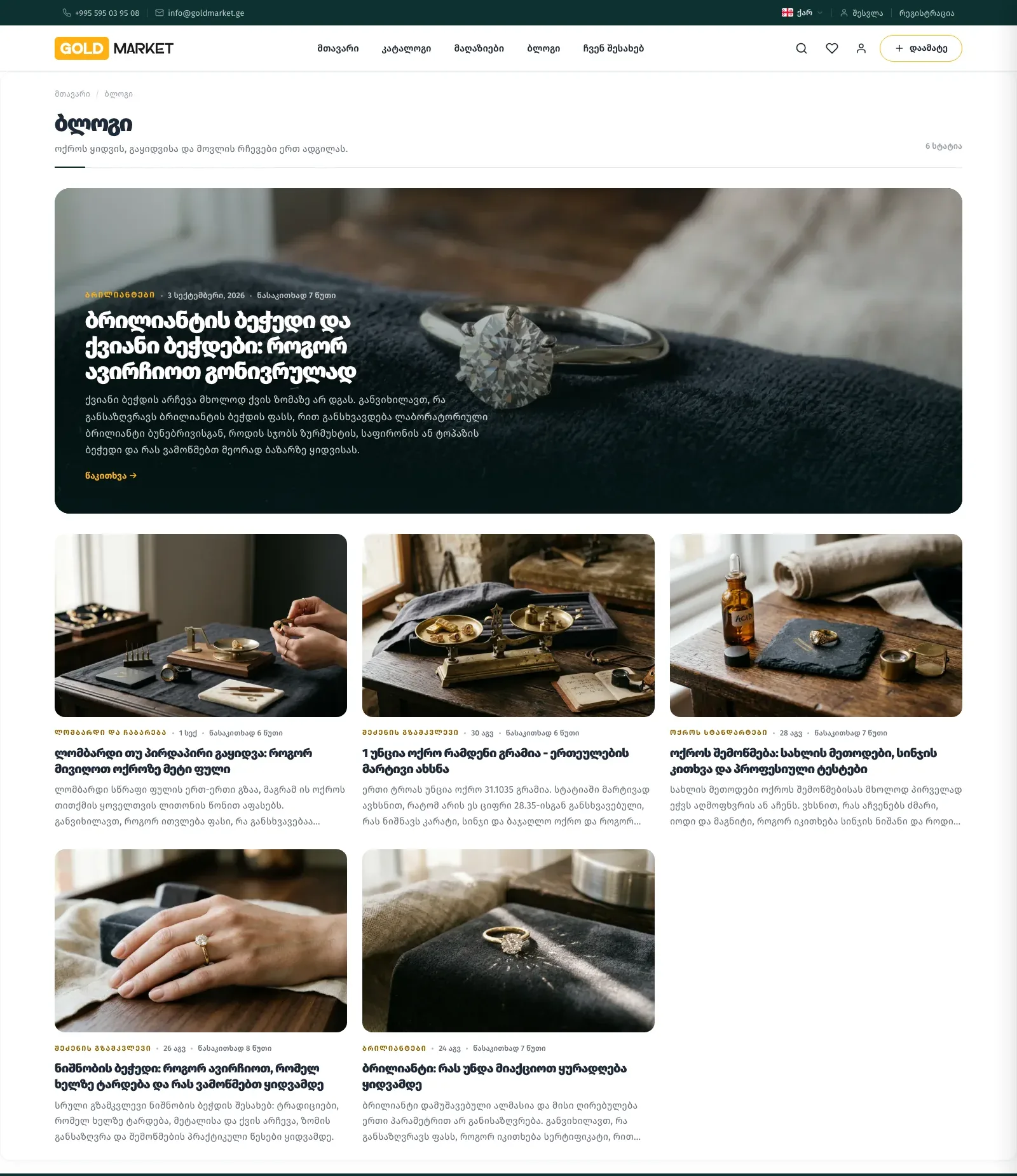
A blog engine that writes for Google and waits for a person.
Every night at 03:15 it takes the next keyword from a bank built off the real catalog, writes a Georgian article of 900 to 1,400 words, art-directs three photos and runs the same proofreader. Everything lands as a draft. Three a week, published every second day at ten.
An article for 56 cents, in the shop’s own clothes.
Text, proofread and three images cost about $0.56 an article, under a $25 monthly cap. The page borrows the product-page anatomy: cover, contents, live gold price in the sidebar. Six articles were live on 13 September. Search Console was only verified on 25 August, so no traffic claims here.
SolvesContent for search, no writer
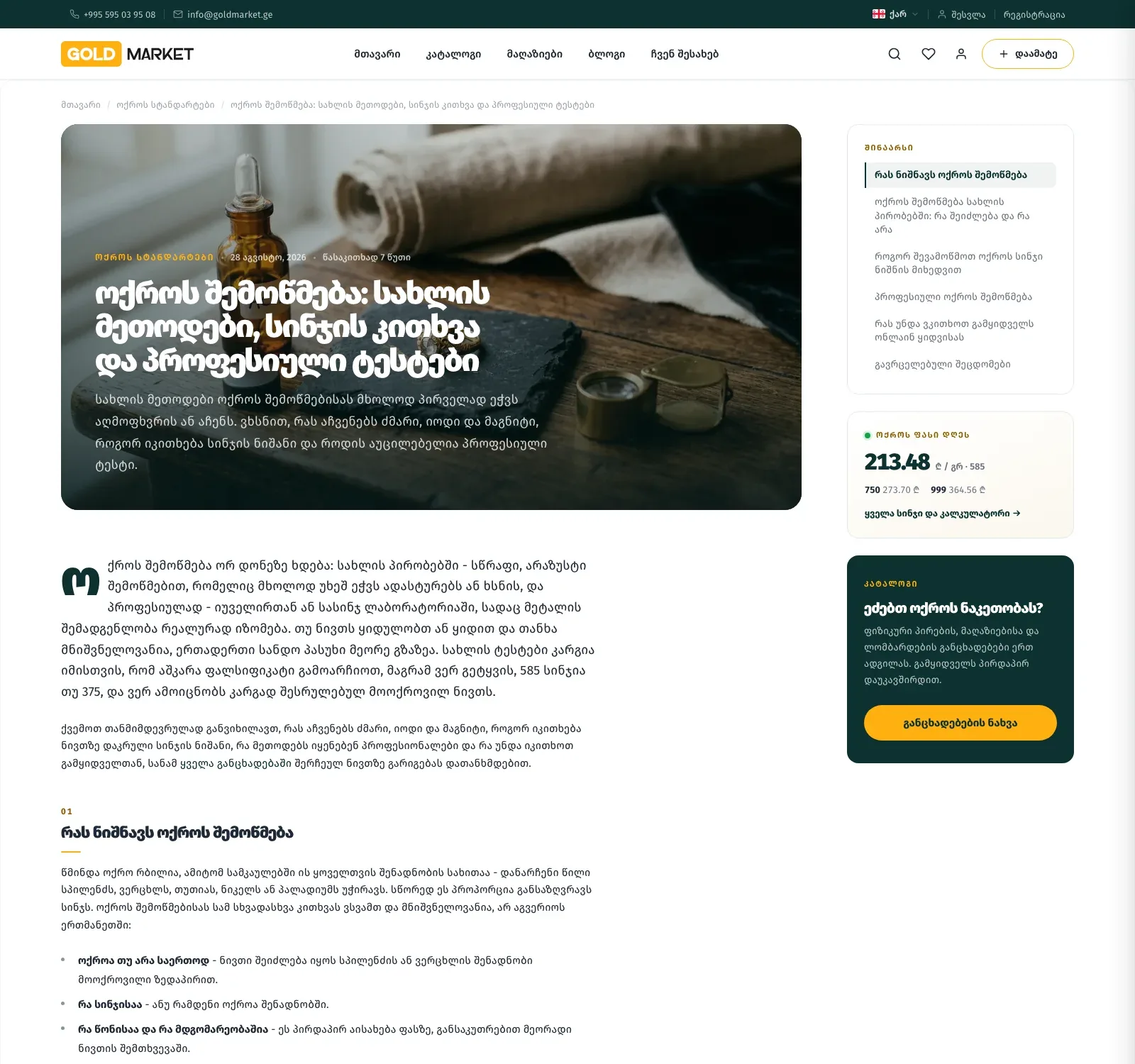
Then the engine published five drafts just before three in the morning.
The first version scheduled five finished drafts and, through one missing flag, published all five at once. They were live for about two minutes. The same afternoon I found the next run would have written an article competing with the shop’s own gold-price page, the one with 17,410 searches. And the sitemap Google was reading was a stale file with no blog posts in it.
So self-publishing was killed. Every article stops as a draft, and one selector decides what the engine may write: never a page the shop already owns. Earlier, the writer had produced 6,876 words for a 1,400-word brief, and the cheap model was banned for inventing Georgian words. None of that reached the blog. The gate did.
Automate the making. Never automate the publish without a guard on what, not just when.
The seller’s phone photo becomes a listing. The founder’s phone hears about it.
Two smaller tools close the loop: one at the moment a seller adds a piece, one the moment anything happens.
AI Studio
Three phone photos in; a filled-in Georgian listing across 46 categories out, in 20 to 25 seconds for about three cents. Then a studio photo for about seven cents. Ten a day per seller, three retries per piece, free as a launch gift. A batch-first design was rejected: the founder wanted the twenty-second moment.
Telegram alerts
Live since 3 August: a message for every registration, first listing and paid boost, in Georgian, never blocking the site. The blog engine reports into the same room when a draft is done. Every approval and alert for both clients arrives in Telegram.
What it did.
14,960
Game cards shipped
Four to seven cents of model fees each
195
Ads in one Meta campaign
Two matches, four languages, six imports
$0.56
Per blog article
Text, proofread, three images
$1.94
First two days of social posting
Replans included; ten posts a week
35/37
Support test battery
Zero unnecessary handoffs, runs in shadow
None of these tools has taste, and none of them can press approve. Both are still my job.
Next case study
Suppo
An AI receptionist for small businesses in Georgia. Built to answer calls and chats on eight channels from one set of facts; the owner watches from a web portal and a phone app.