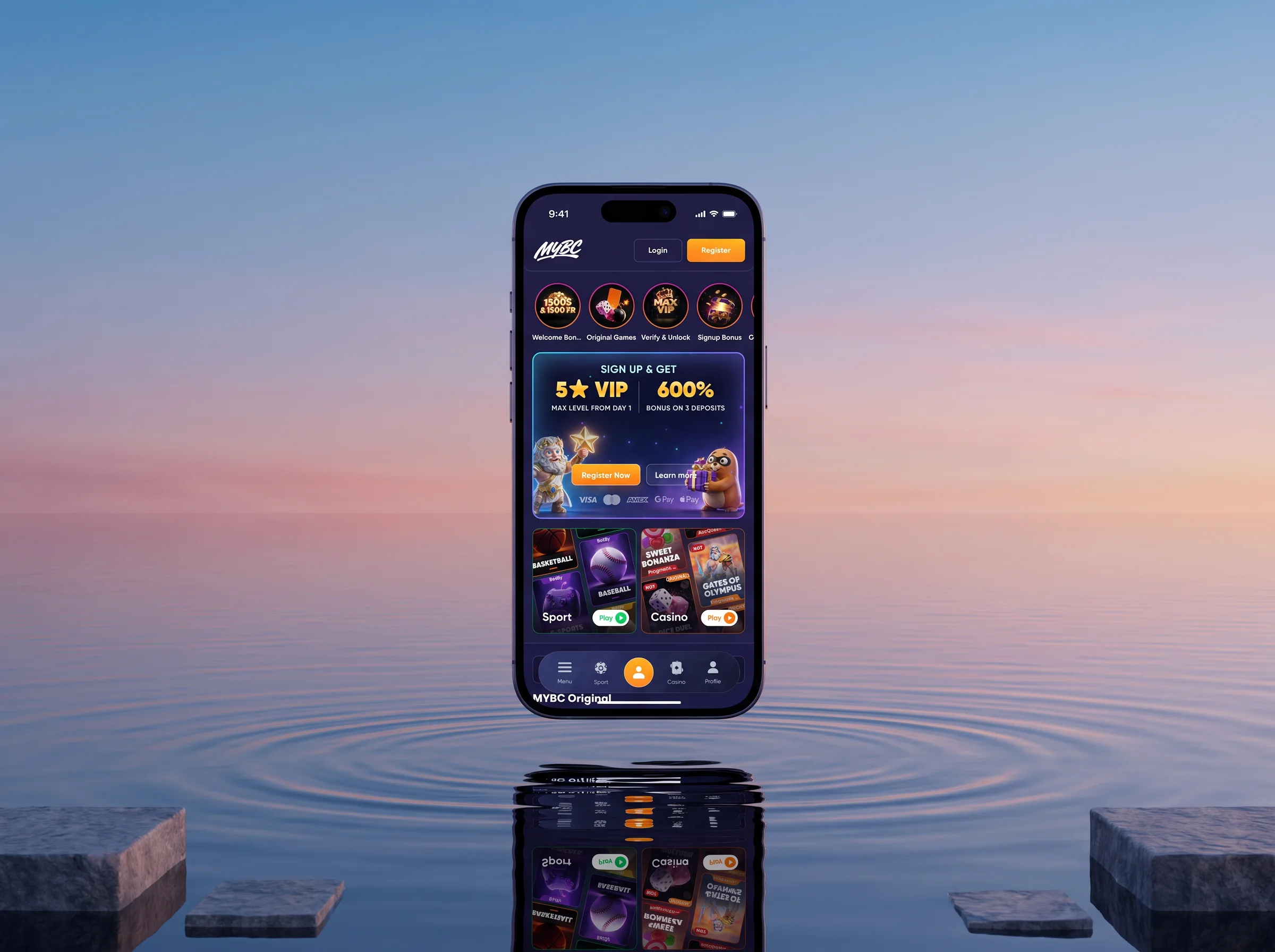
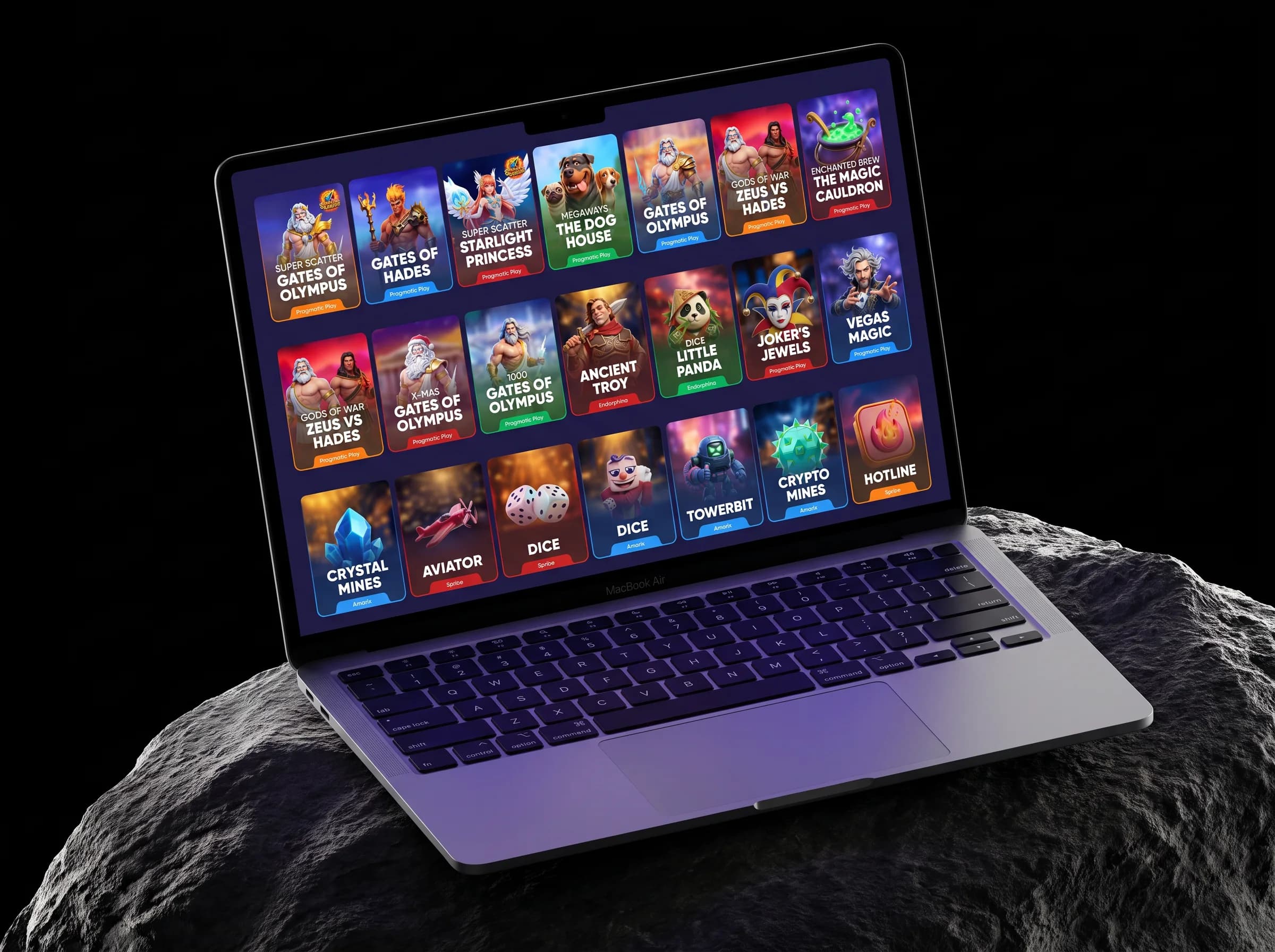
MYBC
A creative department of one — built out of AI tools instead of hires
MYBC is an international online casino and sportsbook. I run its creative side alone: the brand, the performance ads, the campaign banners, the promo landing pages, a sports news site’s social feed, fifteen thousand game thumbnails. That is a department’s worth of output, so instead of hiring a department I built a stack of AI tools that do the repetitive part — and kept the taste part for myself.
Role
Design Lead · Creative Technologist
Timeline
2026 · ongoing
Scope
Brand · Campaigns · AI tools
Year
2026

A casino needs more design than one person can draw.
Game cards for a catalog of fifteen thousand titles. Performance ads for every match, in every market. Campaign banners for every final. A landing page for every promotion. A news site posting daily. Support questions arriving around the clock, in nine languages. And one designer.
15,451
games in the catalog — each wearing its maker’s art
The games come from more than a hundred studios, and every studio ships its own thumbnail style. Put them on one grid and it reads like a flea market, not a brand.
The insight
Wherever the work repeats, build a tool. The tool does the hands. I keep the taste.
A pipeline that redrew the whole game catalog.
Thumb2Hero is a tool I built that turns any provider’s thumbnail into a card in our house style. It looks at the original art, writes down what the game is actually about, redraws the hero as a single 3D character, cuts it out, picks a colour gradient from the original, and checks its own work. Anything it isn’t sure about lands in a review queue for me.
One grid, one brand.
The top row is what six different studios shipped us — six art styles, six kinds of baked-in text. The bottom row is the same six games after the pipeline: one character, one gradient, the platform’s own typography. Multiply by fifteen thousand.
SolvesA flea-market grid

A review room, not a render button.
The pipeline is a state machine — every game moves through analyse, generate, cut out, quality-check — and this screen is where I watch it. Doubtful cards queue for a human verdict: approve, reject, or regenerate. The finished set leaves through an export API the developers pull from directly.
SolvesTrusting 15,000 generations

98/100
of the first live sample came out usable
I ran a 100-game sample before committing to the full catalog. 98 generated clean, and every cutout passed. Only then did the other fifteen thousand go in — at roughly four to seven cents of model fees per finished card.
Then the cutouts started eating people.
The background remover hollowed out dark clothing on dark backgrounds — black suits and dresses came back as outlines. By the time I caught it, 950 of the first 8,276 cutouts were broken. Eleven and a half percent, and no human was ever going to eyeball fifteen thousand images to find them.
So the pipeline got an auditor: a check that flags any cutout with transparent holes inside the subject, plus a colour audit that compares each cutout against its own generation. Both run on every card, and flagged ones re-cut automatically — for free, since the art already exists.
At fifteen thousand images you don’t check quality. You build the thing that checks quality.
An ad factory that turns a fixture list into finished campaigns.
Automato makes the performance ads. Give it a match and an offer, and it produces finished Meta creatives. Every ad is two layers: an AI-painted scene that is banned from containing any text, and a precise template on top that owns the logo, the odds, the headline and the responsible-gambling chrome. The AI never touches the typography, so nothing ships with melted letters.
The picture is AI. The words never are.
One quarter-final, three markets. The copy is translated and overlaid at render time, never baked into the pixels — a new language is a re-render, not a redraw. Club crests come from a sports database rather than the model’s imagination, and a roster guard flags any player named in the copy who isn’t actually in the match.
SolvesMatch-day ads in every market

Crests and odds pulled from data.

Same campaign, another market.

Copy overlaid, never baked in.
One creative, every size Meta asks for.
The hero is generated once, then re-framed into story, feed and landscape. The template re-lays itself out per size using safe areas measured from the real rendered layout, so the subject never hides behind an odds widget. A batch queue renders whole campaigns end to end — a sixty-ad run is a button press, and the finished set exports as Meta-ready bulk files.
SolvesThe format matrix

One locked template, a new story every match day.
Campaign banners run on a design system I locked after eleven rejected versions: dark navy, hex grid, one cinematic object in the middle, the quiz tag, the orange claim button. Only the story changes — the AI renders the scene, the system holds everything else still.
The banner tells the story. The template sells the offer.
Three banners from one Champions League final week. A scarf on a bench for the fans coming back after twenty years; a number nine in light for the striker chasing his twenty-first; the shirt numbers of the Portuguese quartet. Different stories, same skeleton — recognisably one brand at feed speed.
SolvesA team’s output on match-day deadlines

Story first: a scarf, a bench, a final.

Same template, different story.

The system holds even in Portuguese.
A newsroom that posts itself — with a human holding the button.
MYBC also runs a sports news site, mybc.news, publishing in seven languages. I built its social pipeline: every half hour it reads the newest stories, an AI scores them — flagging legal risk and stale news on its own — and writes the Facebook caption in the page’s measured voice. Hook line in caps, one line of context, no hashtags, because the real captions it studied had none.


Nothing posts without a human tap.
Each candidate lands in a Telegram room as a ready-to-post card with four buttons: approve, cancel, swap the copy, or have AI redraw the card in the editorial style the team used to make by hand — the article’s own photo recomposed to 4:5 under a huge condensed headline, about 13 cents a card. The logo is stamped on afterwards as a real vector, because model-drawn logos are never acceptable. One tap publishes to the Facebook page.
SolvesDaily social output, zero unreviewed posts

Drawn in the style of the cards the team used to make by hand; the logo is stamped on as a real vector afterwards.
Seven promo pages that know who’s looking at them.
Every promotion gets a landing page, and every page knows your state: logged out, logged in, bonus claimed, first deposit made. The hero, the copy and the button all change with it — a visitor is asked to sign up, a player is asked to claim. The pages are generated from Python assemblers, so a fix to one component propagates to the whole set on the next build.

The welcome offer.

The number is modelled into the art.

A tournament with a live leaderboard.

Four kinds of cashback, one page.
An AI support agent that writes like the team — because it studied the team.
Support runs on LiveChat, in nine languages, around the clock. I built an assistant for it the same way I built the art pipeline: from the client’s own data. It mined 10,606 archived conversations into a 70-topic knowledge base, reads the customer’s real account state before answering, and every draft is reviewed by a second AI before anything is sent. When it isn’t sure, it hands the chat to a human — with a briefing note, so the customer never repeats themselves.
“My first version wrote 230-character customer-service lectures. Then I measured the real team: median reply, 40 characters, and one message in seven carries an emoji. The bot was polite. The humans were fast. I rewrote it to be fast.”
— Measured across 36,874 real agent messages
Five gates between the model and the customer.
Scan the topic — sensitive ones go straight to a human. The AI drafts with the knowledge base and the live account in view. A rule guard screens the draft. A second model approves, rewrites or rejects it. Only then does it send. On a 37-scenario test battery it answers 35 and hands off the rest — with zero unnecessary transfers. It runs in shadow today; the team decides when it goes live.
SolvesWrong answers about money

What it did.
14,960
Game cards shipped
Generated, QC’d, human-approved
~5¢
Model cost per card
Measured 4–7¢ across the runs
6
Tools in the stack
Cards · ads · banners · landings · news · support
35/37
Support test battery
0 unnecessary human handoffs
The tools don’t have taste. That part is still my job — it’s just the only part left.
Next case study
Goldmarket
A Georgian marketplace for gold and jewellery — designed, coded, tuned and shipped to web, iOS and Android by one person.